
Table of Contents
What Pharma KPIs Actually Matter for Launch Success?
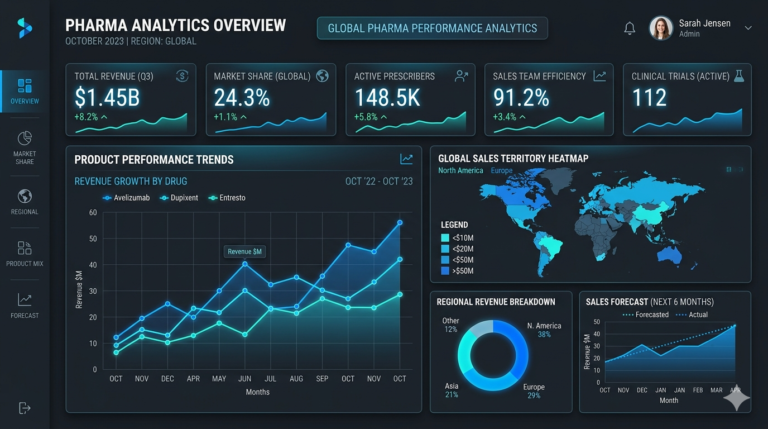
The most important pharma KPIs are those that measure real market impact, not just activity.
These include sales growth, market share, prescription behavior, switching rates, and stakeholder engagement.
Tracking the right KPIs allows teams to adjust strategy early and avoid launch failure.
Without clear KPIs, execution becomes activity-driven instead of outcome-driven.
Why are KPIs critical in pharma launches?
A launch without KPIs is blind.
Many teams focus on:
- Number of visits
- Number of events
- Activity volume
But these are not outcomes.
The real problem:
Teams measure effort, not impact.
👉 As explained in
🔗 Related Post: How to Build a Pharma Launch Plan: 7 Proven Steps
KPIs must be directly linked to growth drivers, not activities.
What are the 8 most important pharma KPIs?
Let’s focus on the KPIs that actually influence success.
1. Sales Growth (Value and Units)
This is the most basic KPI, but often misunderstood.
What to track:
- Monthly sales growth
- Year-over-year growth
- Units vs value
Why it matters:
It reflects:
- Market adoption
- Strategy effectiveness
- Execution quality
Real insight:
Healthy launch growth often follows a structured pattern, not random spikes.
2. Market Share (MS%)
Market share shows your real position vs competitors.
What to track:
- Total market share
- Share by segment
- Share by specialty
Why it matters:
Sales growth alone can be misleading.
You might grow while losing share.
3. Prescription Behavior (Rx Dynamics)
This is one of the most critical KPIs.
Break it into:
- New prescriptions (New Rx)
- Repeat prescriptions
- Switching prescriptions
Why it matters:
It explains how your growth happens.
👉 As discussed in
🔗 Related Post: Why Pharma Launches Fail: 9 Critical Mistakes
Ignoring Rx behavior leads to poor decisions and missed opportunities.
4. Switching Rate
This is your competitive weapon.
What to track:
- % of prescriptions from competitors
- Switching by specialty
- Switching over time
Why it matters:
In mature markets:
Growth = switching
Example logic:
- Target competitor patients
- Offer better value
- Track conversion
5. Coverage and Reach
Your strategy is only as strong as your reach.
Key metrics:
- % of target doctors covered
- Frequency of visits
- Segmentation coverage
Why it matters:
Even strong positioning fails without reach.
6. Stakeholder Engagement
Modern pharma requires multi-stakeholder engagement.
What to track:
- KOL engagement
- Event participation
- Medical interactions
Why it matters:
Stakeholder influence drives:
- Adoption
- Trust
- Advocacy
7. Activity Effectiveness (Not Activity Volume)
This is where most teams fail.
Wrong approach:
- Count visits
- Count events
Correct approach:
Measure:
- Impact per visit
- Conversion rate
- Message retention
Why it matters:
Not all activity creates value.
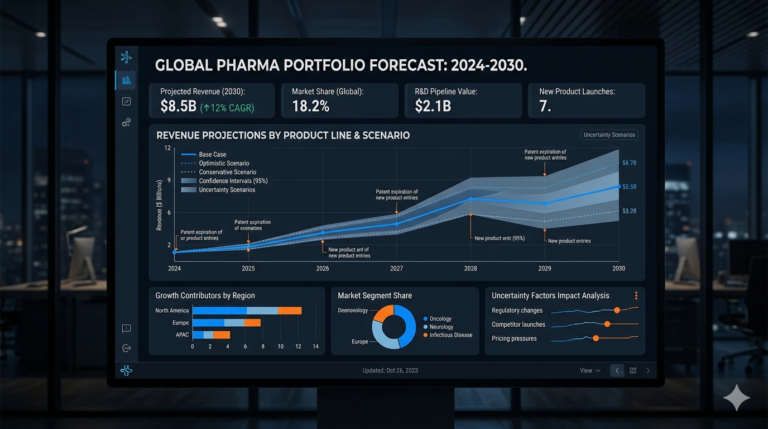
8. Forecast Accuracy
Forecasting is not about being right.
It is about being realistic.
What to track:
- Forecast vs actual
- Deviation percentage
- Trend consistency
A forecast is based on assumptions and probability, not certainty.
Why it matters:
- Improves planning
- Reduces risk
- Enables faster correction
How should you structure your Pharma KPIs system?
KPIs should not be random metrics.
They must be structured into three layers:
1. Strategic KPIs
- Market share
- Growth
- Positioning impact
2. Operational KPIs
- Coverage
- Activity effectiveness
- Execution quality
3. Behavioral KPIs
- Rx behavior
- Switching
- Stakeholder engagement
👉 This structure ensures you track:
- What is happening
- Why is it happening
- How to fix it
How do you turn KPIs into real insights?
Data alone is useless.
You need interpretation.
Example:
If sales increase but market share drops:
👉 You are growing slower than the market
If coverage is high but Rx is low:
👉 Your message is weak
If switching is low:
👉 Your competitive strategy is failing
This is how KPIs guide decisions.
How can tools improve Pharma KPIs tracking?
Most pharma teams struggle because:
- Data is scattered
- Analysis is slow
- Insights are unclear
Use structured tools instead:
1. Excel Chart Builder
Use it to:
- Visualize trends
- Compare performance
- Identify patterns
2. Marketing Plan Generator
Use it to:
- Link KPIs to strategy
- Define success metrics
- Align execution
3. Manager Effectiveness Heatmap
Use it to:
- Identify performance gaps
- Improve team output
4. Turnover Index
Use it to:
- Predict disruptions
- Maintain consistency
👉 These tools turn KPIs from numbers into decision systems
What is the biggest mistake in Pharma KPIs tracking?
The biggest mistake is:
👉 Tracking everything without understanding anything
Common issues:
- Too many KPIs
- No prioritization
- No action
Correct approach:
- Track fewer KPIs
- Focus on impact
- Link to decisions
Final Insight
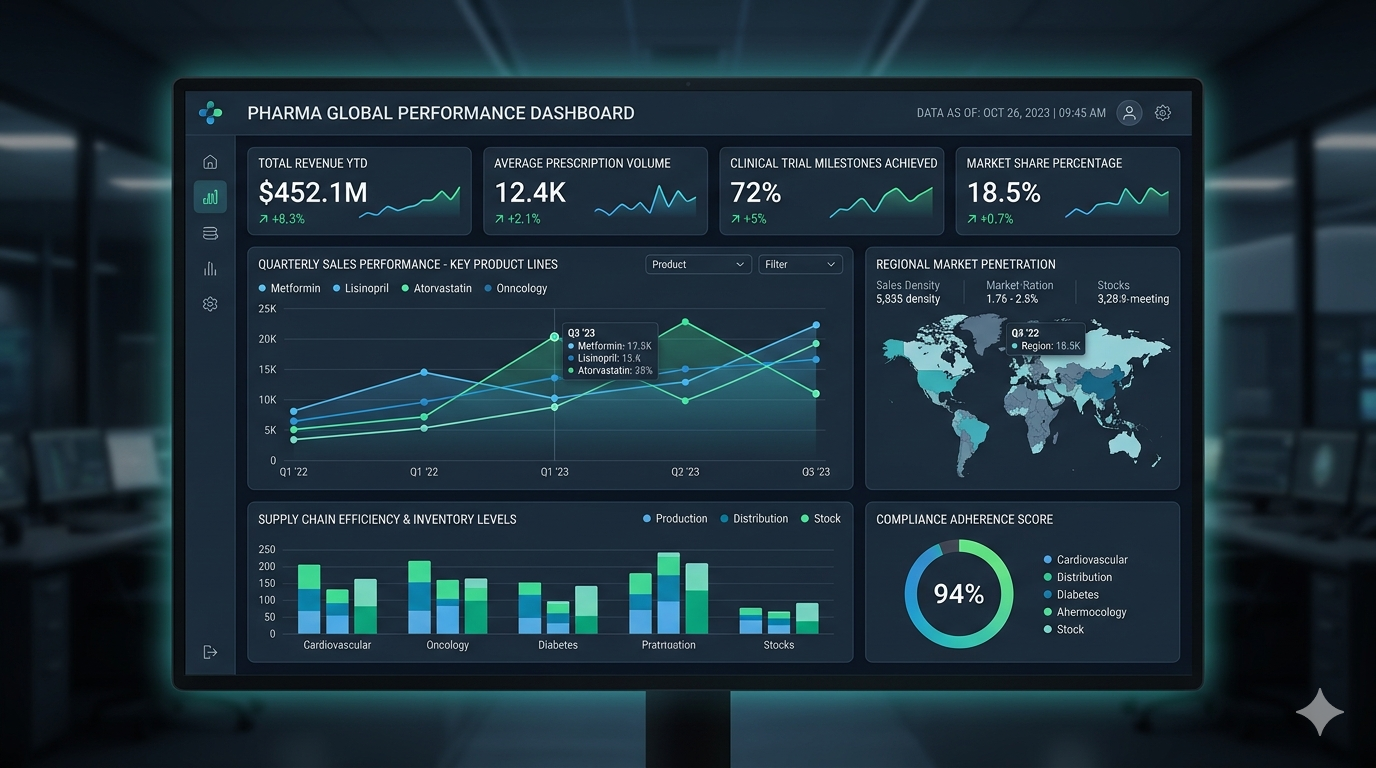
KPIs are not dashboards.
They are decision tools.
If your KPIs do not change your decisions:
👉 They are useless
In pharma:
- Data is available
- Insights are rare
The difference between average and winning teams is simple:
👉 Winning teams know what to track
👉 And what to ignore