
Table of Contents
How Do You Build a Pharma Switching Strategy That Wins Market Share?
A pharma switching strategy is built by identifying competitor weaknesses, defining clear clinical or economic advantages, targeting the right patients, and executing through focused messaging and stakeholder alignment.
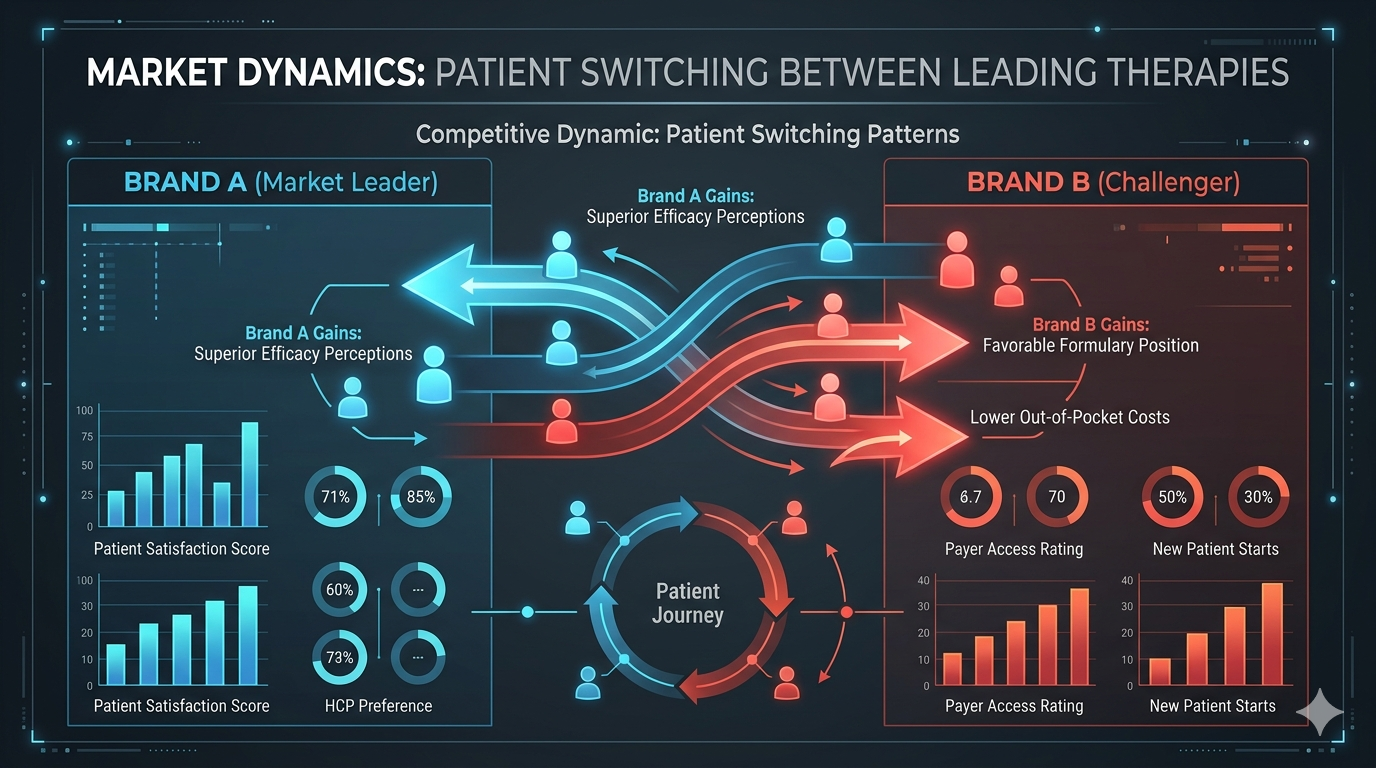
Growth in competitive markets comes primarily from switching, not new patients.
Without a structured switching strategy, market share growth remains limited.
Winning brands actively convert competitor patients, not just attract new ones.
Why is switching the most important growth driver in pharma?
In most pharmaceutical markets:
- The majority of patients are already treated
- Competitors dominate existing prescriptions
This means:
👉 Growth does not come from new patients
👉 Growth comes from switching
👉 As explained in
🔗 Related Post: Pharma KPIs That Matter: 8 Proven Metrics Guide
Switching rate is one of the most critical indicators of competitive success.
What is a pharma switching strategy?
A pharma switching strategy is a structured approach to:
- Move patients from competitor products
- Change prescribing behavior
- Capture market share
It answers three key questions:
- Who will switch?
- Why will they switch?
- When will they switch?
What are the 6 core elements of a winning switching strategy?
1. Identify the right competitor targets
Not all competitors are equal.
You must define:
- Market leaders
- Weak competitors
- Vulnerable segments
Example segmentation:
- High side effects
- Poor compliance
- High cost
👉 Switching starts with target selection, not messaging.
2. Define a clear switching trigger
Doctors do not switch without a reason.
Common triggers:
- Side effects
- Lack of efficacy
- Cost issues
- New indication
Important:
Your product must solve a real problem, not a theoretical advantage.
3. Build a strong value proposition
Your message must be:
- Clear
- Specific
- Relevant
Weak message:
- “Effective and safe.”
Strong message:
- “Better tolerated in chronic cases.”
- “More affordable alternative”
- “Dual benefit across indications”
👉 As highlighted in
🔗 Related Post: Why Pharma Launches Fail: 9 Critical Mistakes
Weak positioning is one of the main reasons switching fails.
4. Target the right patients
Switching is patient-specific.
Identify:
- Moderate to severe cases
- Patients with poor response
- Patients experiencing side effects
Why this matters:
Not all patients are switchable.
👉 Precision targeting increases:
- Conversion rate
- Efficiency
- ROI
5. Align stakeholders to support switching
Switching is not only a doctor’s decision.
Key stakeholders:
- Physicians
- KOLs
- Institutions
- Payers
Research shows that multiple stakeholders influence treatment decisions, not just prescribers.
Practical approach:
- Use KOLs to validate switching
- Engage institutions for protocols
- Align messaging across channels
6. Track switching performance
You cannot improve what you do not measure.
Track:
- Switching rate
- Rx changes
- Market share gain
👉 As discussed in
🔗 Related Post: What Pharma KPIs Actually Matter for Launch Success?
Switching must be tracked as a core KPI.
How does switching strategy connect to launch success?
A launch without switching is incomplete.
👉 As explained in
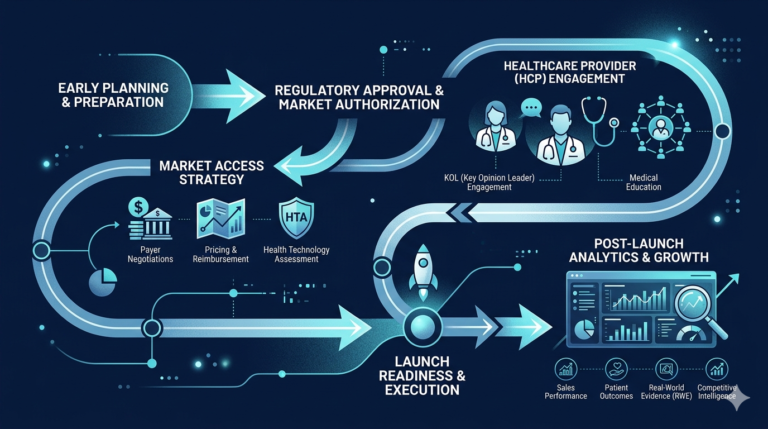
🔗 Related Post: How to Build a Pharma Launch Plan: 7 Proven Steps
Growth comes from:
- New patients
- Switching
- Repeat
But in reality:
👉 Switching is the fastest growth lever
What are the common mistakes in switching strategy?
1. No clear competitor target
Trying to switch from everyone = switching from no one
2. Weak differentiation
If there is no clear reason, doctors will not change behavior
3. Wrong patient targeting
Targeting stable patients leads to low conversion
4. Poor execution alignment
Mismatch between strategy and field execution
5. No KPI tracking
No visibility = no improvement
How can tools improve your switching strategy?
1. Marketing Plan Generator
Use it to:
- Define switching segments
- Structure strategy
- Align execution
2. Excel Chart Builder
Use it to:
- Track switching trends
- Compare competitor performance
- Visualize market shifts
3. Manager Effectiveness Heatmap
Use it to:
- Identify execution gaps
- Improve field targeting
4. Turnover Index
Use it to:
- Maintain team consistency
- Protect switching momentum
👉 Switching requires precision execution, not just strategy
What is the biggest misconception about switching?
The biggest misconception is:
👉 “Doctors don’t change habits.”
Reality:
Doctors switch when:
- There is a clear benefit
- The message is relevant
- The timing is right
Your role:
Create the conditions that make switching easy.
Final Insight
Switching is not persuasion.
It is problem-solving.
If your product:
- Solves a real issue
- Targets the right patient
- Is supported by clear messaging
Switching will happen.
If not:
👉 No amount of promotion will change behavior