
Table of Contents
How Do You Build a Pharma Portfolio Management Framework?
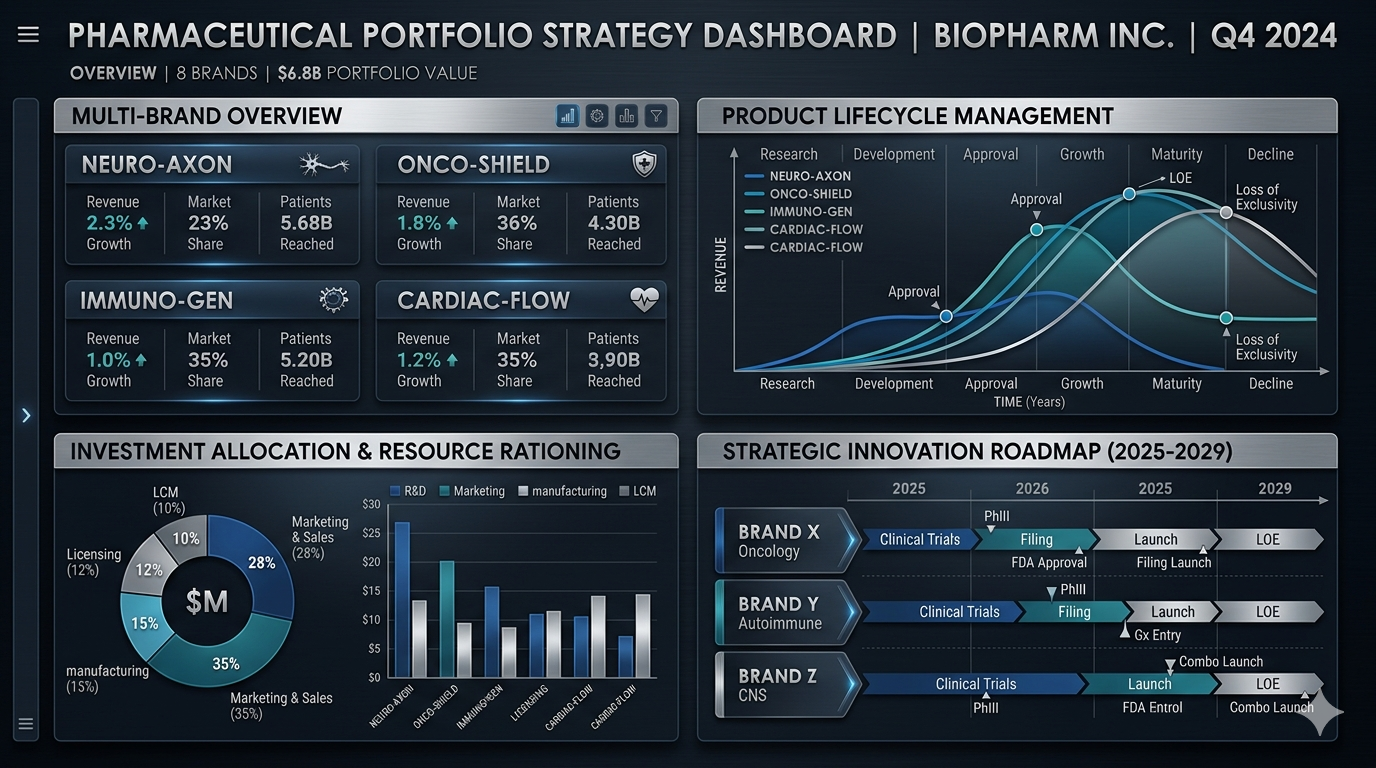
A pharma portfolio management framework is a structured approach for evaluating, prioritizing, investing in, and optimizing multiple brands, products, and growth opportunities.
Strong portfolio management helps organizations allocate resources effectively, manage risk, and maximize long-term value.
Weak portfolio management creates fragmented investments and missed opportunities.
The most successful pharma companies manage portfolios, not just products.
What is portfolio management in pharma?
Pharma portfolio management is the process of making strategic decisions across multiple brands and assets.
It involves deciding:
- Which brands to invest in
- Which opportunities to prioritize
- Which products to expand
- Which assets to optimize
- Which initiatives to discontinue
Important reality:
Resources are limited.
Therefore:
Every portfolio decision is a prioritization decision.
Why is portfolio management important?
Many organizations manage brands independently.
This creates problems such as:
- Resource conflicts
- Internal competition
- Investment inefficiency
- Strategic inconsistency
Strong portfolio management improves:
- Growth quality
- Resource efficiency
- Risk management
- Long-term sustainability
Important principle:
The goal is not maximizing every brand.
The goal is maximizing portfolio value.
Why do pharma portfolio strategies fail?
Most failures result from:
- Historical decision-making
- Internal politics
- Short-term thinking
- Weak forecasting
- Poor prioritization
Common mistake:
Investing equally across all brands.
Reality:
Not every brand deserves equal investment.
👉 As discussed in
🔗 Related Post: Pharma Resource Allocation: 7 Proven Strategy Principles
Investment decisions should follow opportunity.
What are the 8 pillars of effective pharma portfolio management?
1. Assess portfolio strategically
Start with a complete portfolio review.
Evaluate:
- Revenue contribution
- Growth potential
- Market position
- Lifecycle stage
- Competitive strength
Important question:
Which assets create the most value?
Portfolio visibility is the foundation of good decisions.
2. Understand lifecycle positioning
Every brand occupies a different lifecycle stage.
Typical stages include:
- Pre-launch
- Launch
- Growth
- Maturity
- Decline
Each stage requires:
- Different objectives
- Different investments
- Different KPIs
👉 As discussed in
🔗 Related Post: Pharma Brand Lifecycle Management: 7 Proven Strategies
Lifecycle stage should influence portfolio decisions.
3. Allocate resources according to opportunity
Portfolio management determines where investments go.
Resources include:
- Marketing budgets
- Sales force support
- Medical activities
- Digital investments
- Market access resources
Important principle:
Investment should follow potential.
Common mistake:
Funding based on history instead of opportunity.
4. Use forecasting to guide decisions
Forecasting supports portfolio prioritization.
Forecasting helps estimate:
- Growth potential
- Revenue contribution
- Risk exposure
- Investment return
Forecasting frameworks emphasize structured assumptions and scenario planning rather than intuition alone.
Strong portfolio decisions rely on evidence.
👉 As discussed in
🔗 Related Post: How Do You Forecast a Pharma Launch Accurately?
Forecast quality influences investment quality.
5. Balance risk and growth
Strong portfolios contain different asset types.
Examples include:
Growth Assets
- Launch brands
- Expansion opportunities
Core Assets
- Established revenue generators
Strategic Assets
- Long-term growth opportunities
Important:
Overreliance on one category increases risk.
Portfolio balance improves resilience.
6. Evaluate market access impact
Access influences portfolio performance.
Consider:
- Reimbursement status
- Access barriers
- Pricing pressure
- Institutional adoption
Research consistently highlights growing stakeholder and payer influence over commercial success.
Important:
A strong product with weak access may become a weak investment.
👉 As discussed in
🔗 Related Post: Pharma Market Access Strategy: 7 Proven Success Steps
Access should influence portfolio priorities.
7. Monitor portfolio KPIs continuously
Portfolio decisions require measurement.
Important metrics include:
- Portfolio growth
- Revenue mix
- Forecast accuracy
- ROI
- Market share contribution
Why this matters:
Performance visibility supports better decisions.
👉 As discussed in
🔗 Related Post: Pharma KPIs That Matter: 8 Proven Metrics Guide
Measurement drives optimization.
8. Review and optimize continuously
Markets evolve.
Competitors react.
Stakeholders change.
Therefore:
Portfolio strategy should remain dynamic.
Review regularly:
- Brand priorities
- Resource allocation
- Forecast assumptions
- Growth opportunities
Strong organizations adapt faster.
How does portfolio management support launches?
Launches compete for resources.
Portfolio management helps determine:
- Investment levels
- Priority sequencing
- Resource allocation
Important:
Not every launch should receive the same support.
👉 As discussed in
🔗 Related Post: How to Build a Pharma Launch Plan: 7 Proven Steps
Launch planning should align with portfolio priorities.
How does portfolio management support commercial excellence?
Commercial excellence requires focus.
Portfolio management helps:
- Prioritize initiatives
- Align investments
- Improve execution quality
Strong portfolios improve organizational performance.
👉 As discussed in
🔗 Related Post: Pharma Commercial Excellence: 8 Proven Framework Pillars
Strategic alignment improves execution.
How can tools support portfolio management?
1. Marketing Plan Generator
Use it to:
- Build strategic brand plans
- Compare opportunities
- Align portfolio priorities
2. Excel Chart Builder
Use it to:
- Visualize portfolio performance
- Compare brand contributions
- Track growth trends
3. Manager Effectiveness Heatmap
Use it to:
- Assess leadership capability
- Improve execution quality
4. Turnover Index
Use it to:
- Protect continuity in critical brands
- Reduce organizational risk
👉 Portfolio success depends on both strategy and execution.
What are the biggest portfolio management mistakes?
1. Equal investment across brands
Creates inefficiency.
2. Ignoring lifecycle stages
Leads to poor resource decisions.
3. Weak forecasting
Reduces decision quality.
4. Short-term thinking
Damages long-term growth.
5. Poor performance visibility
Prevents optimization.
Final Insight
Portfolio management is not about managing products.
It is about managing choices.
The strongest pharma organizations understand:
- Where growth will come from
- Which assets deserve investment
- Which opportunities should be prioritized
In pharma:
👉 Resources create value only when allocated strategically
Organizations that manage portfolios effectively usually:
- Forecast better
- Allocate resources smarter
- Balance risk more effectively
- Grow more sustainably
Related Guides You Should Review Next
🔗 Related Post: Pharma Resource Allocation: 7 Proven Strategy Principles
🔗 Related Post: Pharma Brand Lifecycle Management: 7 Proven Strategies
🔗 Related Post: How Do You Forecast a Pharma Launch Accurately?
🔗 Related Post: Pharma Commercial Excellence: 8 Proven Framework Pillars
🔗 Related Post: Pharma Market Access Strategy: 7 Proven Success Steps
🔗 Related Post: How to Build a Pharma Launch Plan: 7 Proven Steps