
Table of Contents
How Do You Build an Omnichannel Strategy in Pharma?
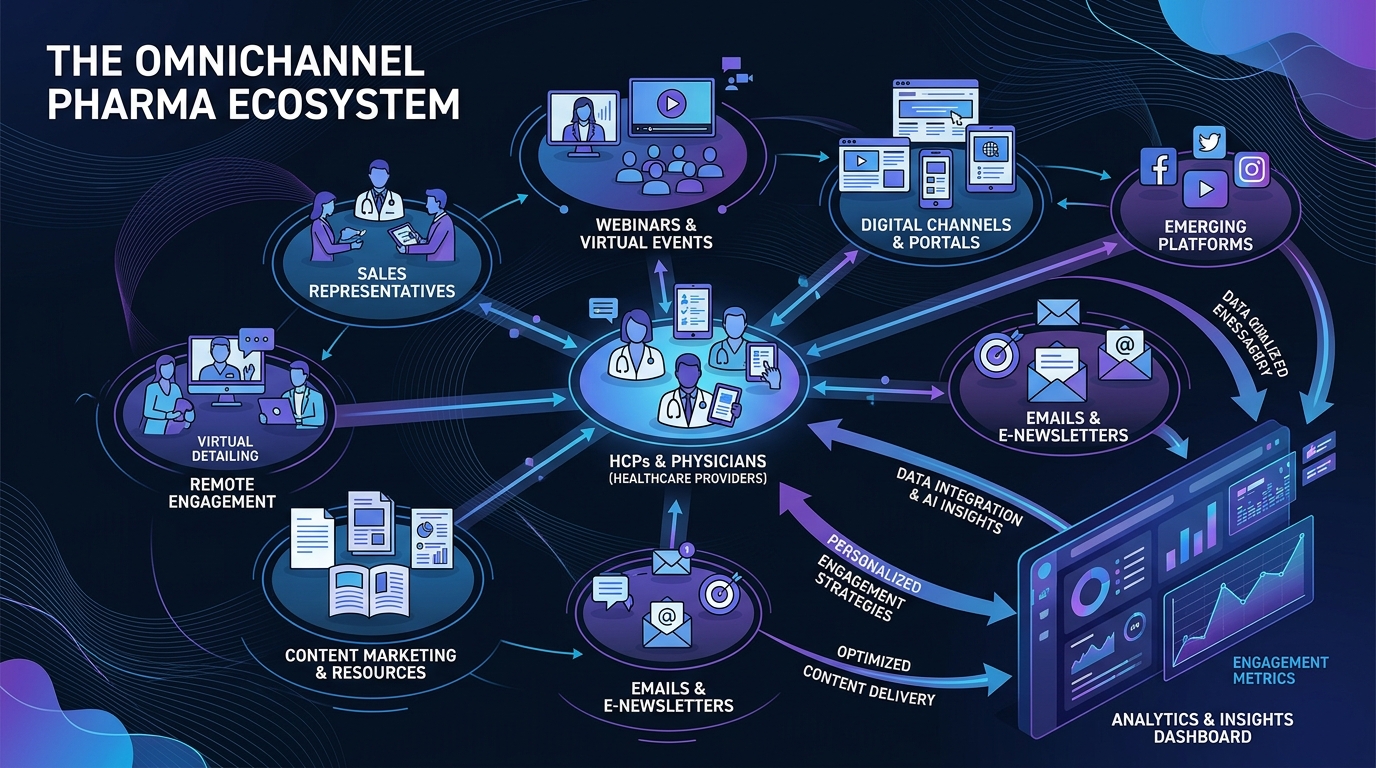
An omnichannel strategy in pharma is a coordinated approach that delivers consistent, personalized, and relevant engagement across multiple stakeholder touchpoints.
It integrates field force activities, digital channels, scientific communication, educational programs, and stakeholder interactions into one connected experience.
Strong omnichannel strategies improve engagement quality, adoption, and commercial performance.
Without integration, communication becomes fragmented and less effective.
What is omnichannel marketing in pharma?
Omnichannel marketing is the practice of creating a connected experience across multiple engagement channels.
Common pharma channels include:
- Sales representatives
- Email communication
- Webinars
- CME programs
- Scientific meetings
- Websites
- Medical education platforms
- Digital content
- Virtual events
Important distinction:
Omnichannel strategy in pharma is not simply using many channels.
Multichannel:
Many channels operating independently.
Omnichannel:
Many channels working together.
The goal:
Create one coordinated stakeholder experience.
Why has the omnichannel strategy in pharma become important?
Healthcare professionals have changed.
Today they:
- Consume information digitally
- Attend virtual events
- Engage through multiple platforms
- Expect personalized interactions
At the same time:
Access restrictions have increased.
Result:
Traditional field-force-only models are no longer enough.
Modern engagement requires:
- Flexibility
- Personalization
- Coordination
👉 As discussed in
🔗 Related Post: Pharma Commercial Excellence: 8 Proven Framework Pillars
Commercial performance increasingly depends on execution quality and stakeholder engagement.
Why do omnichannel strategies fail?
Most failures happen because organizations focus on channels rather than customers.
Common mistakes:
- Channel silos
- Inconsistent messaging
- Poor segmentation
- No customer journey planning
- Weak measurement
Result:
Stakeholders receive disconnected experiences.
Important principle:
Customers experience one journey.
Not separate channels.
What are the 7 principles of an effective omnichannel strategy in pharma?
1. Start with customer segmentation
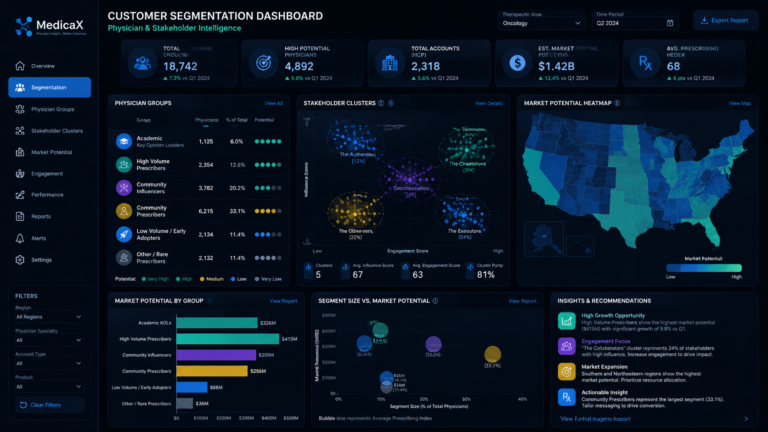
Omnichannel begins with understanding stakeholders.
Segment based on:
- Specialty
- Behavior
- Influence
- Engagement preferences
- Adoption stage
Example:
Some physicians prefer:
- Face-to-face discussions
Others prefer:
- Digital education
Important:
Different segments require different channel mixes.
👉 As discussed in
🔗 Related Post: Customer Segmentation in Pharma: 8 Proven Strategies
Segmentation drives engagement quality.
2. Map the stakeholder journey
Before choosing channels, understand the journey.
Key questions:
- How do stakeholders learn?
- How do they evaluate evidence?
- How do they adopt products?
- What barriers exist?
Typical journey stages:
Awareness
↓
Interest
↓
Evaluation
↓
Adoption
↓
Advocacy
Why this matters:
Different channels support different stages.
3. Align scientific messaging across channels
Consistency is critical.
Stakeholders should hear:
The same core story
Across:
- Field force interactions
- CME activities
- Digital channels
- Scientific events
Inconsistent messaging creates:
- Confusion
- Reduced trust
- Lower effectiveness
👉 As discussed in
🔗 Related Post: Scientific Messaging Framework in Pharma
Consistency improves credibility and recall.
4. Integrate field force and digital engagement
The strongest omnichannel strategies connect human and digital interactions.
Example:
A physician may:
- Attend a webinar
- Receive follow-up content
- Meet a representative
- Participate in a CME event
Each interaction should reinforce previous engagement.
Important:
Channels should complement each other.
Not compete.
5. Personalize engagement
Relevance improves effectiveness.
Personalization may include:
- Content preferences
- Specialty interests
- Clinical focus
- Adoption stage
Example:
A cardiologist and neurologist may require:
- Different evidence
- Different educational materials
- Different engagement approaches
Why this matters:
Personalized engagement increases attention and retention.
6. Measure engagement across channels
Omnichannel success requires visibility.
Track:
- Email engagement
- Webinar participation
- CME attendance
- Representative interactions
- Content consumption
Important question:
Which channels influence behavior most effectively?
👉 As discussed in
🔗 Related Post: Pharma Dashboard Design: 7 Proven Decision Frameworks
Visibility improves decision-making.
7. Optimize continuously
Stakeholder preferences change.
Monitor:
- Engagement trends
- Channel performance
- Adoption indicators
- Customer feedback
Strong organizations:
- Test
- Learn
- Adapt
Omnichannel is not static.
It evolves continuously.
How does omnichannel support launches?
Launches require rapid awareness and education.
Omnichannel strategies help:
- Increase reach
- Improve consistency
- Accelerate adoption
- Reinforce scientific messaging
Example launch ecosystem:
- Representative visits
- Scientific webinars
- Educational emails
- CME activities
- KOL discussions
👉 As discussed in
🔗 Related Post: How to Build a Pharma Launch Plan: 7 Proven Steps
Launch success depends on coordinated stakeholder engagement.
How does omnichannel support KOL engagement?
KOL relationships involve multiple touchpoints.
Examples include:
- Advisory boards
- Scientific meetings
- Educational content
- Digital discussions
Omnichannel improves:
- Continuity
- Visibility
- Engagement quality
👉 As discussed in
🔗 Related Post: Pharma KOL Engagement: 7 Proven Strategy Principles
Relationships strengthen through consistent engagement.
How does omnichannel support CME strategy?
Educational experiences increasingly combine:
- Live events
- Virtual programs
- On-demand learning
- Scientific resources
Omnichannel improves:
- Reach
- Participation
- Learning continuity
👉 As discussed in
🔗 Related Post: Pharma CME Strategy: 7 Proven Marketing Principles
Education should support ongoing engagement.
How can tools support omnichannel execution?
1. Marketing Plan Generator
Use it to:
- Structure omnichannel plans
- Align objectives
- Coordinate activities
2. Excel Chart Builder
Use it to:
- Visualize engagement trends
- Compare channel performance
- Track campaign outcomes
3. Manager Effectiveness Heatmap
Use it to:
- Improve cross-channel execution leadership
- Identify capability gaps
4. Turnover Index
Use it to:
- Protect engagement continuity
- Reduce relationship disruption
👉 Omnichannel success depends on coordinated execution.
What are the biggest omnichannel mistakes?
1. Channel-first thinking
Focus should be on stakeholders.
2. Inconsistent messaging
Reduces trust.
3. No segmentation
Creates generic engagement.
4. Weak measurement
Limits optimization.
5. Siloed teams
Create disconnected experiences.
Final Insight
Omnichannel marketing is not about adding more channels.
It is about creating better experiences.
The strongest pharma organizations deliver:
- Consistent communication
- Personalized engagement
- Coordinated journeys
- Measurable outcomes
In pharma:
👉 Stakeholders do not experience channels
👉 They experience relationships
Organizations that succeed with omnichannel strategies usually:
- Understand customer journeys
- Align messaging
- Integrate teams
- Continuously optimize engagement
Related Guides You Should Review Next
🔗 Related Post: Customer Segmentation in Pharma: 8 Proven Strategies
🔗 Related Post: Scientific Messaging Framework in Pharma
🔗 Related Post: Pharma KOL Engagement: 7 Proven Strategy Principles
🔗 Related Post: Pharma CME Strategy: 7 Proven Marketing Principles
🔗 Related Post: Pharma Commercial Excellence: 8 Proven Framework Pillars
🔗 Related Post: How to Build a Pharma Launch Plan: 7 Proven Steps