
Table of Contents
How Do You Build a KOL Engagement Strategy in Pharma?
A pharma KOL engagement strategy is built by identifying influential experts, aligning scientific value with stakeholder needs, and creating long-term collaborative relationships that support adoption, credibility, and market access.
KOL engagement is not about sponsorship alone.
It is about building trusted scientific influence networks.
Without strategic KOL alignment, launches struggle to gain momentum and credibility.
What is a KOL in pharma?
KOL stands for Key Opinion Leader.
In pharma, KOLs are influential experts who shape:
- Prescribing behavior
- Clinical discussions
- Treatment guidelines
- Institutional decisions
- Peer influence
KOLs may include:
- Professors
- Department heads
- Scientific speakers
- Researchers
- Influential clinicians
Important reality:
KOL influence is often indirect but extremely powerful.
Why is KOL engagement critical in pharma?
Pharma decisions are heavily influenced by trust and scientific confidence.
KOLs help:
- Accelerate adoption
- Validate positioning
- Support indication expansion
- Reduce switching resistance
- Improve market access discussions
Especially during launches:
KOLs help transform:
- Product awareness → clinical confidence
👉 As explained in
🔗 Related Post: How to Build a Pharma Launch Plan: 7 Proven Steps
Launch success depends on stakeholder alignment, not promotion alone.
Why do most KOL engagement strategies fail?
Most companies treat KOL engagement as:
- Event sponsorship
- One-time interaction
- Promotional activity
This creates:
- Weak relationships
- Low advocacy
- Limited long-term influence
Common mistakes:
- Choosing KOLs based only on title
- No scientific value exchange
- Poor follow-up
- Generic engagement plans
👉 As discussed in
🔗 Related Post: Why Pharma Launches Fail: 9 Critical Mistakes
Weak strategic thinking always appears during execution.
What are the 7 principles of effective pharma KOL engagement?
1. Identify the right KOLs strategically
Not every famous doctor is strategically valuable.
Strong KOL selection considers:
- Influence level
- Specialty relevance
- Scientific credibility
- Network reach
- Institutional impact
Important distinction:
Some KOLs influence:
- Large audiences
Others influence:
- High-value decision-makers
Best approach:
Map both:
- Visibility influence
- Strategic influence
2. Understand the stakeholder network
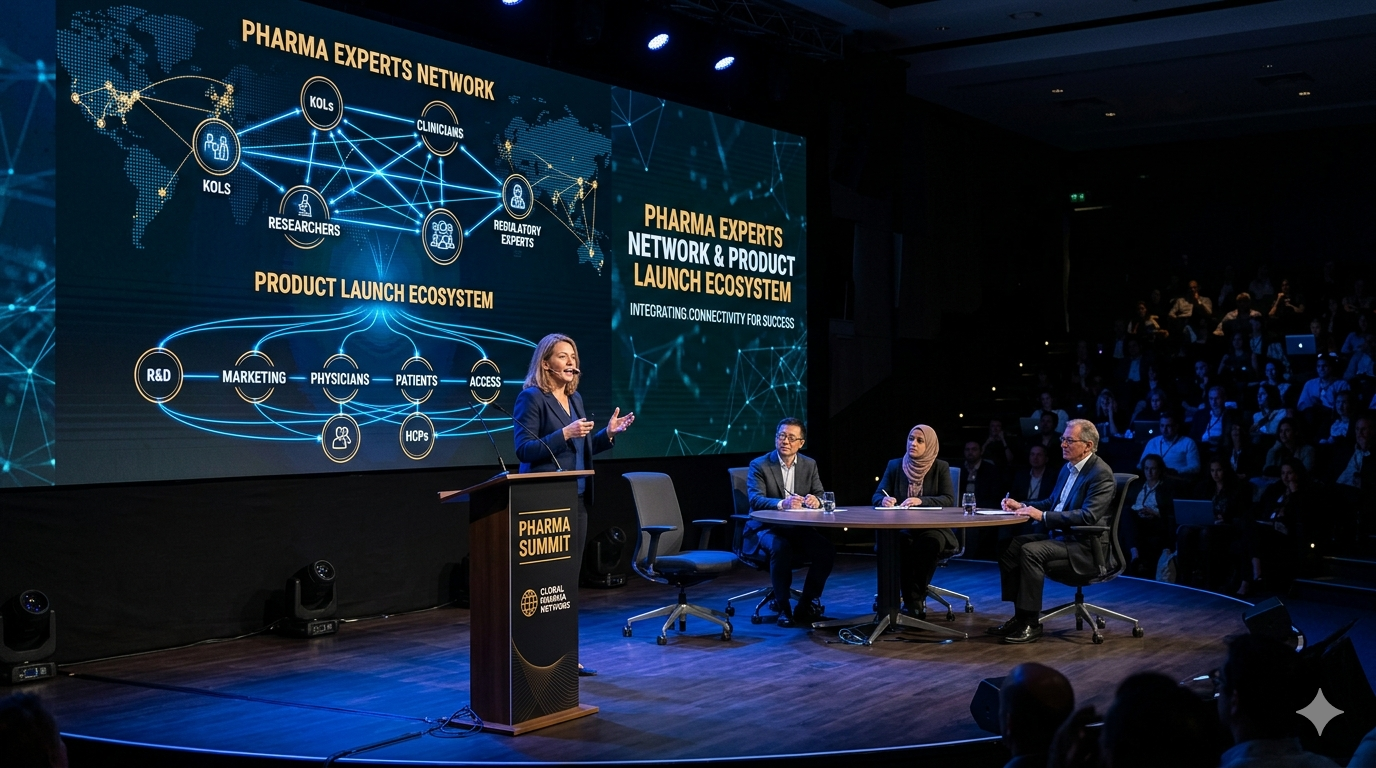
KOLs operate inside influence ecosystems.
Modern pharma requires understanding:
- Referral dynamics
- Institutional influence
- Specialty relationships
- Society leadership
Research highlights the importance of mapping stakeholder influence networks to improve engagement effectiveness
Why this matters:
The most influential expert is not always the loudest one.
3. Align engagement with scientific value
KOL engagement must be scientifically meaningful.
Valuable engagement includes:
- Research collaboration
- Educational initiatives
- Scientific discussions
- Clinical evidence exchange
Weak engagement includes:
- Purely promotional interaction
- Transactional sponsorship
Important principle:
KOLs support brands that contribute to science and patient care.
4. Engage early during launch planning
Top pharma companies engage KOLs early.
Why?
Because KOLs help:
- Shape positioning
- Validate unmet needs
- Refine messaging
- Improve launch readiness
Research shows strong pharma organizations integrate stakeholder engagement earlier in development and commercialization planning
Common mistake:
Starting engagement after launch.
5. Build long-term relationships, not campaigns
KOL engagement is cumulative.
Long-term engagement creates:
- Trust
- Advocacy
- Scientific alignment
- Sustainable support
Relationship-building methods:
- Ongoing discussions
- Advisory boards
- Educational programs
- Collaborative scientific activities
Important:
Strong relationships cannot be built through isolated events.
6. Support pharma KOL engagement with evidence
Scientific influence requires scientific confidence.
Support discussions with:
- Clinical evidence
- Real-world data
- Comparative outcomes
- Local insights
Example activities:
- Clinical surveys
- Case discussions
- Evidence generation programs
Why this matters:
KOLs influence based on evidence, not marketing language.
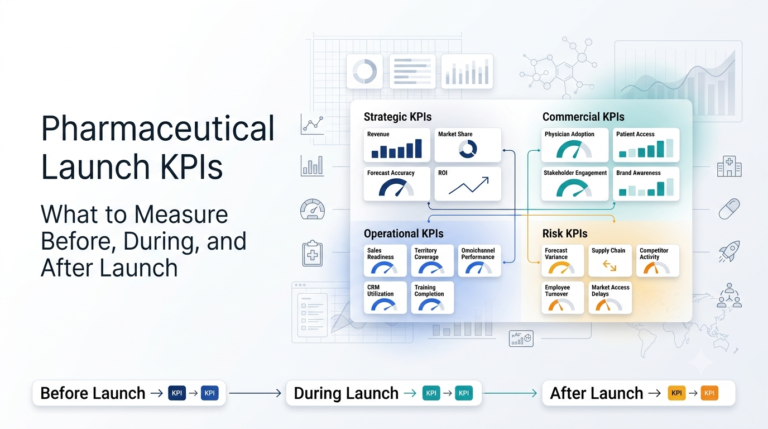
7. Measure engagement effectiveness
Most companies track activity, not impact.
Wrong metrics:
- Number of meetings
- Number of sponsored events
Better metrics:
- Advocacy level
- Scientific participation
- Adoption influence
- Speaker engagement
- Prescription impact
👉 As explained in
🔗 Related Post: Pharma KPIs That Matter: 8 Proven Metrics Guide
Metrics should reflect behavioral and business impact.
How does pharma KOL engagement support indication expansion?
KOLs are critical for expanding into new indications.
Why?
Because they help:
- Validate new usage
- Reduce adoption resistance
- Educate specialties
- Support scientific credibility
Practical examples include:
- Specialty workshops
- Clinical surveys
- Educational sponsorships
👉 As discussed in
🔗 Related Post: Pharma Indication Expansion: 6 Proven Growth Strategies
Each new indication behaves like a mini-launch.
How does KOL engagement support switching strategy?
Switching requires trust.
KOLs help reduce:
- Clinical uncertainty
- Habit resistance
- Competitive loyalty
Especially when:
- Entering crowded markets
- Challenging market leaders
- Repositioning treatment approaches
👉 As explained in
🔗 Related Post: Pharma Switching Strategy: 6 Proven Ways to Win
Behavior change requires strong credibility drivers.
How can tools improve pharma KOL engagement execution?
1. Marketing Plan Generator
Use it to:
- Structure KOL strategy
- Align scientific activities
- Define engagement roadmap
2. Excel Chart Builder
Use it to:
- Visualize stakeholder influence
- Track engagement impact
- Compare regional performance
3. Manager Effectiveness Heatmap
Use it to:
- Improve leadership alignment
- Strengthen execution consistency
4. Turnover Index
Use it to:
- Protect relationship continuity
- Reduce disruption risk in key territories
👉 KOL engagement depends heavily on organizational stability and execution quality.
What is the biggest misconception about KOL engagement?
The biggest misconception is:
👉 “KOL engagement is mainly sponsorship”
Reality:
KOL engagement is:
- Strategic
- Scientific
- Relationship-driven
- Long-term
The strongest KOL relationships are built on:
- Mutual respect
- Scientific value
- Consistent collaboration
Final Insight
KOLs do not create success alone.
But they accelerate:
- Trust
- Adoption
- Credibility
- Market confidence
In pharma:
👉 Products rarely win only through promotion
👉 They win when science, trust, and execution align
The companies that engage KOLs best usually:
- Understand stakeholder influence deeply
- Invest in scientific value early
- Build relationships before they need them
Related Guides You Should Review Next
🔗 Related Post: How to Build a Pharma Launch Plan: 7 Proven Steps
🔗 Related Post: Pharma Market Access Strategy: 7 Proven Success Steps
🔗 Related Post: Pharma Sales Force Effectiveness: 8 Proven Frameworks
🔗 Related Post: Pharma Switching Strategy: 6 Proven Ways to Win
🔗 Related Post: Pharma Indication Expansion: 6 Proven Growth Strategies