
Table of Contents
How Do You Build a Pharma Market Development Strategy?
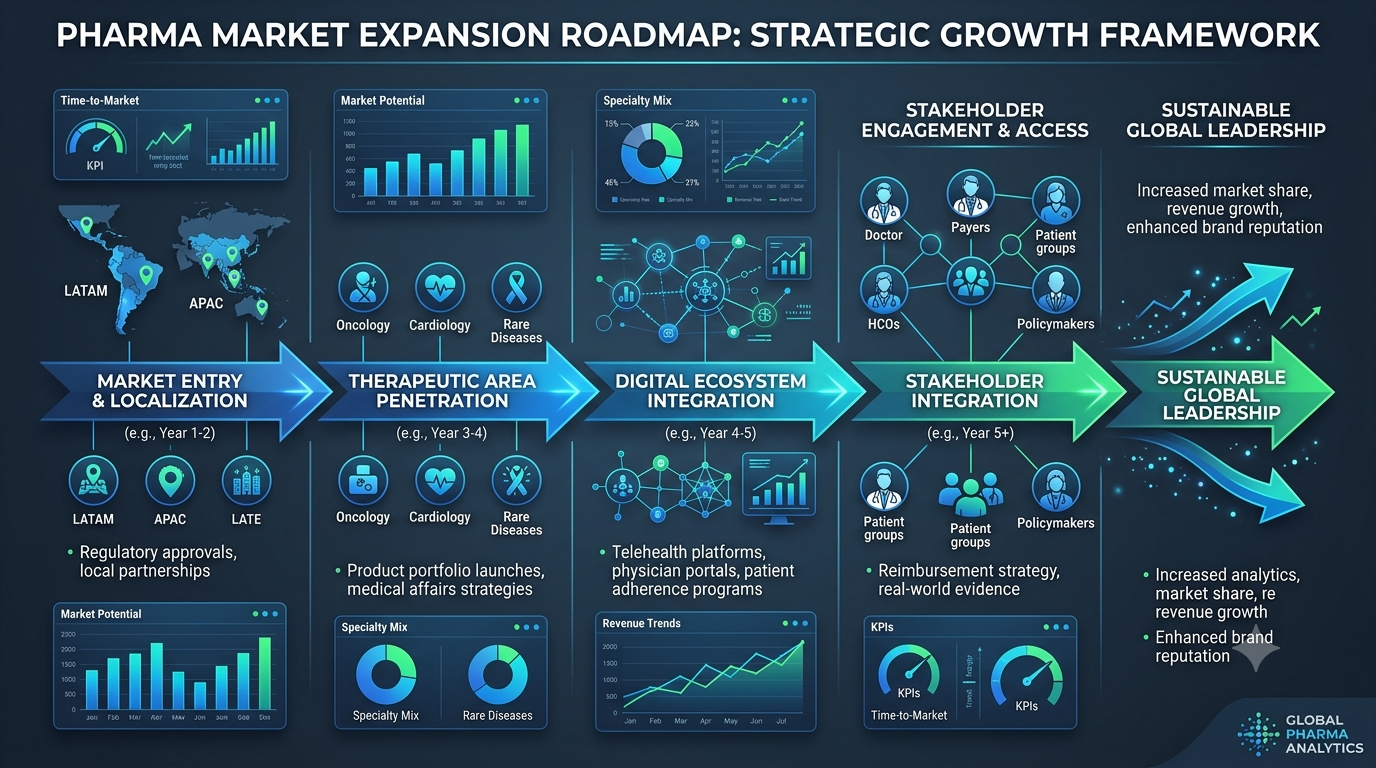
A pharma market development strategy is a structured approach to expanding commercial opportunities by entering new markets, reaching new customer segments, supporting new indications, or increasing access to existing products. Rather than relying only on greater sales within existing markets, market development focuses on creating new sources of sustainable growth.
Successful pharma organizations continuously identify opportunities to expand their market while maintaining scientific credibility and commercial discipline.
What is market development in pharma?
Market development is the process of increasing business growth by expanding where and how an existing product is used.
Growth opportunities may include:
- New physician specialties
- New geographic markets
- New healthcare institutions
- Additional patient populations
- New indications
- Improved market access
- Digital engagement channels
Important distinction
Market development is different from market penetration.
Market Penetration
Increase sales within existing customers.
Market Development
Expand into new customer groups or new markets.
Why is market development important?
Every successful brand eventually reaches maturity.
Without expansion opportunities:
- Growth slows
- Competition increases
- Resources become less productive
Strong market development allows organizations to:
- Extend product growth
- Reduce dependency on one segment
- Increase portfolio value
- Improve long-term sustainability
👉 As discussed in
🔗 Related Post: Pharma Brand Lifecycle Management: 7 Proven Strategies
Growth should continue long after launch.
Why do market development strategies fail?
Most failures occur because companies expand without sufficient preparation.
Common mistakes include:
- Entering markets without stakeholder understanding
- Weak market research
- Limited scientific evidence
- Poor segmentation
- Underestimating market access challenges
Important principle
Expansion should follow evidence.
Not optimism.
What are the 8 principles of a successful pharma market development strategy?
1. Identify attractive growth opportunities
Expansion begins with opportunity assessment.
Evaluate:
- Market size
- Disease burden
- Competitive intensity
- Unmet medical need
- Healthcare infrastructure
Ask:
Where can this brand create additional value?
Forecasting and launch planning frameworks emphasize assessing growth drivers before committing resources.
2. Prioritize high-value customer segments
Every new market contains different customer groups.
Examples include:
- New specialties
- High-growth physicians
- Hospital systems
- Integrated healthcare networks
- Community healthcare providers
Customer segmentation should guide expansion priorities.
👉 As discussed in
🔗 Related Post: Customer Segmentation in Pharma: 8 Proven Strategies
Segmentation improves commercial efficiency.
3. Strengthen scientific evidence
New markets often require additional evidence.
Examples include:
- Local clinical data
- Real-world evidence
- Health economic studies
- Guideline support
Scientific evidence reduces adoption barriers.
Research consistently shows evidence generation and stakeholder confidence are major drivers of successful commercialization.
4. Build stakeholder support early
Expansion depends on more than physicians.
Key stakeholders include:
- KOLs
- Payers
- Hospital committees
- Medical societies
- Healthcare authorities
Strong stakeholder engagement accelerates adoption.
👉 As discussed in
🔗 Related Post: Stakeholder Mapping Framework in Pharma
Growth follows influence networks.
5. Adapt positioning for new markets
Different markets have different priorities.
Examples:
One specialty may value:
- Clinical efficacy
Another may prioritize:
- Patient adherence
- Administration convenience
- Economic outcomes
Core positioning remains consistent.
Supporting messages should adapt.
👉 As discussed in
🔗 Related Post: Brand Positioning in Pharma: 7 Proven Strategic Principles
Positioning should remain relevant across different stakeholder groups.
6. Align commercial execution
Expansion requires coordinated execution.
Teams should align:
- Marketing
- Medical Affairs
- Sales
- Market Access
Common mistake:
Expansion managed by one department alone.
Commercial excellence requires cross-functional coordination.
👉 As discussed in
🔗 Related Post: Pharma Commercial Excellence: 8 Proven Framework Pillars
Alignment improves execution quality.
7. Measure expansion performance
Growth initiatives require dedicated KPIs.
Track:
- New customer acquisition
- Market share growth
- Adoption rates
- Access achievements
- Forecast accuracy
Review progress regularly.
Expansion strategies should evolve based on performance.
👉 As discussed in
🔗 Related Post: Pharma KPIs That Matter: 8 Proven Metrics Guide
KPIs should guide strategic decisions.
8. Scale successful approaches
Successful expansion creates repeatable models.
Examples include:
- Specialty expansion playbooks
- Regional launch models
- Stakeholder engagement frameworks
- Scientific communication strategies
Organizations should institutionalize success.
How does the pharma market development strategy support indication expansion?
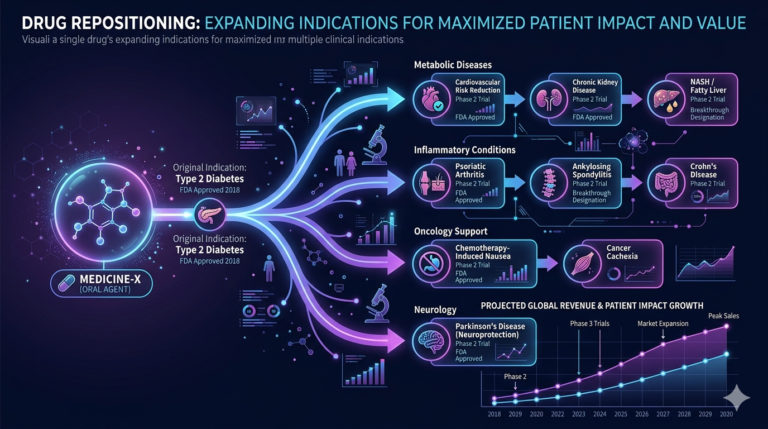
Indication expansion is one form of market development.
It requires:
- New evidence
- New stakeholder engagement
- New positioning
- New educational activities
👉 As discussed in
🔗 Related Post: Pharma Indication Expansion: 6 Proven Growth Strategies
Each indication behaves like a strategic market expansion.
How does market development support forecasting?
Expansion changes demand assumptions.
Forecasts should evaluate:
- Adoption timing
- Market size
- Competitive response
- Resource requirements
Scenario planning strengthens these forecasts.
👉 As discussed in
🔗 Related Post: Pharma Scenario Planning Framework
Growth assumptions should be tested under multiple scenarios.
How does market development support portfolio strategy?
Expansion creates new portfolio opportunities.
Portfolio leaders should evaluate:
- Which brands deserve expansion investment?
- Which markets offer the highest return?
- Which assets support long-term growth?
👉 As discussed in
🔗 Related Post: Pharma Portfolio Management Framework
Growth investments should align with portfolio priorities.
How can RxLauncher tools support market development?
Marketing Plan Generator
Use it to:
- Build structured expansion plans
- Define objectives
- Organize launch activities
Excel Chart Builder
Use it to:
- Compare market opportunities
- Visualize growth trends
- Monitor expansion KPIs
Manager Effectiveness Heatmap
Use it to:
- Evaluate leadership readiness
- Improve execution quality
Turnover Index
Use it to:
- Maintain continuity in expanding markets
- Reduce organizational risk
What are the biggest market development mistakes?
1. Expanding without research
Leads to poor investment decisions.
2. Assuming all markets behave similarly
Every market has unique characteristics.
3. Weak stakeholder engagement
Slows adoption.
4. Insufficient evidence
Reduces credibility.
5. Poor execution alignment
Limits commercial impact.
Final Insight
Market development is not simply entering new markets.
It is expanding value creation.
The strongest pharma organizations ask:
- Where are unmet needs?
- Which stakeholders remain underserved?
- How can existing capabilities create new growth?
In pharma:
👉 Sustainable growth comes from creating new opportunities, not only protecting existing ones.
Organizations that excel at market development usually:
- Research thoroughly
- Prioritize carefully
- Execute consistently
- Learn continuously
Related Guides You Should Review Next
🔗 Related Post: Pharma Brand Lifecycle Management: 7 Proven Strategies
🔗 Related Post: Customer Segmentation in Pharma: 8 Proven Strategies
🔗 Related Post: Stakeholder Mapping Framework in Pharma
🔗 Related Post: Pharma Commercial Excellence: 8 Proven Framework Pillars
🔗 Related Post: Pharma Scenario Planning Framework
🔗 Related Post: Pharma Portfolio Management Framework